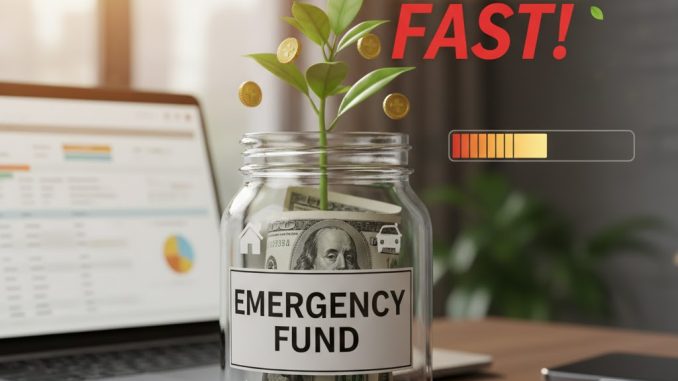
In the world of personal finance, an emergency fund is your ultimate defense against life’s curveballs—a sudden job loss, a major car repair, or an unexpected medical bill. Without one, these events can trigger a spiral of high-interest debt.
Financial experts widely recommend saving 3 to 6 months of living expenses. While a three-month cushion is a great start, aiming for a 6-month emergency fund offers maximum peace of mind.
Think that goal is too big or takes too long? We’re going to break down the exact, actionable steps you can take to build that financial fortress, and build it fast.
Step 1: Calculate Your “Survival Number”
Before you can start saving, you need a precise target. Your goal should be based on your essential living expenses, not your full income or discretionary spending.
Action Item: Go through your last three months of bank statements and list only the must-pay bills.
| Essential Expense Category | Monthly Cost |
| Rent/Mortgage Payment | |
| Utilities (Gas, Electric, Water, Internet) | |
| Essential Groceries (not dining out) | |
| Minimum Debt Payments (if any) | |
| Insurance (Health, Car, Home) | |
| Necessary Transportation (Gas/Transit) | |
| Total Monthly Essential Expenses | [A] |
Your 6-Month Emergency Fund Goal:
Focusing only on essential expenses prevents you from overcomplicating the goal and keeps the target achievable.
Step 2: The Two-Tiered Approach (Build Momentum)
The large 6-month number can feel overwhelming. The key to building your emergency fund fast is to break it into smaller, more motivating goals.
Tier 1: The Starter Fund (The “Mini-Goal”)
- Goal: $1,000 – $2,000 (enough to cover small, common emergencies like a broken appliance or a minor car repair).
- Strategy: Attack this goal with extreme intensity. Use every quick-cash method (see Step 4) to hit this target in 30-60 days. Achieving this first win provides the psychological boost needed for the long haul.
Tier 2: The Fully Funded Cushion
- Goal: The full 6-month amount calculated in Step 1.
- Strategy: Once Tier 1 is funded, you have a safety net while you work on the larger, more systematic saving methods in Steps 3 and 4.
Step 3: Automate Your Savings (The Set-It-and-Forget-It Method)
The single biggest factor in building an emergency fund fast is removing the decision-making process. If you have to decide to save every month, you will often find a reason not to.
- Open a Separate High-Yield Savings Account (HYSA): Do not keep your emergency money in your everyday checking account. A HYSA offers a higher interest rate and makes the money slightly less convenient to access for impulse spending. Liquidity is key, but separation is crucial.
- Set Up Direct Deposit: If your employer allows, have a portion of your paycheck (e.g., $100, $200, or more) automatically deposited directly into your HYSA before it ever hits your checking account.
- Automate Transfers: If direct deposit isn’t an option, set up a recurring automatic transfer from your checking to your savings account to happen the day after every paycheck. Treat your savings transfer like a non-negotiable bill.
Step 4: Turbo-Charge Your Fund with Quick-Cash Strategies
To hit your 6-month emergency fund goal fast, you need to aggressively free up extra money that can be directed straight to savings.
| Strategy | Action to Take | Fast Savings Potential |
| The Income Windfall Funnel | Redirect 100% of any unexpected income: tax refunds, work bonuses, commission checks, birthday money, or insurance payouts. | Highest (Can add thousands quickly) |
| The Budget Blitz | Cut out all non-essential spending for one month: dining out, streaming services, gym memberships (use an outdoor run/home workout instead), and discretionary shopping. | High (Often $300 – $800+ per month) |
| The “Sell Your Stuff” Challenge | Sell unused or unwanted items on sites like Facebook Marketplace, eBay, or dedicated local apps. Look for clothes, electronics, and furniture. | Medium (Great for the initial $1k goal) |
| The Negotiator | Call your internet, cell phone, and insurance providers and ask for a lower rate or review your current plan for savings. | Medium (Permanent monthly reduction) |
Step 5: Protect and Maintain Your Cushion
Once you hit your 6-month target, you might be tempted to stop. Don’t! The job is to protect what you’ve built and ensure the fund is ready when you need it.
- Only Use it for True Emergencies: This fund is for income loss, major repairs, or medical crises—not vacation, holiday shopping, or a new TV.
- Replenish Immediately: If you use a portion of the fund, make replenishing it your absolute #1 financial priority. Go back to your intense saving methods until the fund is fully stocked at the 6-month level again.
- Keep it Liquid: Do not invest this money in the stock market or illiquid assets like Certificates of Deposit (CDs). It needs to be safe and available within 24 hours. The small interest you earn from a High-Yield Savings Account is the tradeoff for security and accessibility.
Having a fully funded 6-month emergency fund is the bedrock of any successful financial life. It allows you to take risks with investing, pursue better job opportunities, and sleep soundly knowing you are truly protected from the unexpected. Start today, stay disciplined, and you will achieve financial security faster than you think.
Leave a Reply